Joyful Jots

A collection of little reflections, jotted from the heart — to deepen your journey and light the way.

These thoughtful mini-writings offer insight, encouragement, and a deeper understanding of the gentle, neuroscience-backed philosophy behind joyful bilingual learning.

Whether you’re wondering why your child thrives with repetition, how to respond to big emotions, or what’s really happening in the bilingual brain — these Jots are here to guide you.

Short enough to read in a quiet moment. Deep enough to stay with you.
Perfect for curious parents who want to go beyond the how-to and into the why it matters.

Helping Your Child Thrive in Two (or More) Languages

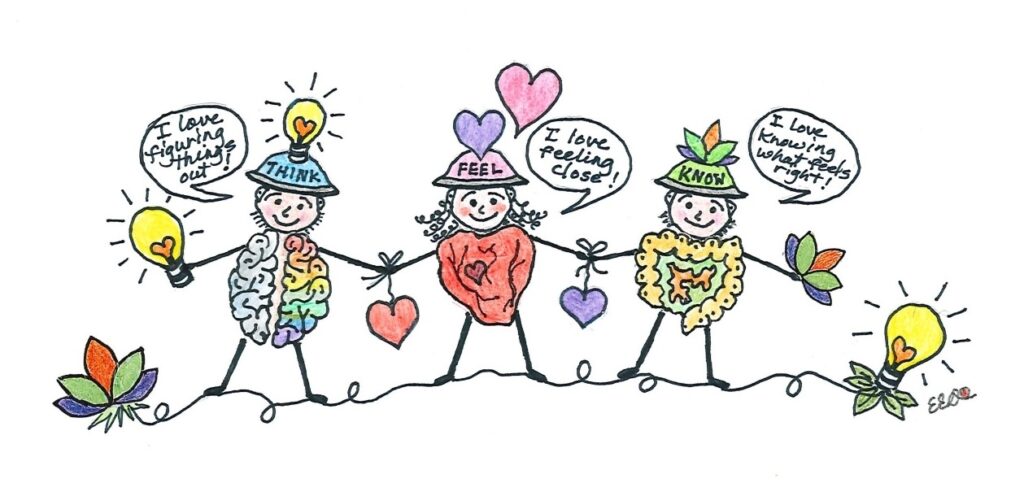
When young children are learning more than one language, it’s not just their brain that’s working — it’s their whole self. They learn with their mind, their emotions, and even their intuition.

In fact, science now shows that children, and adults alike, have three powerful “intelligence centers”:

     🧠 the brain (thinking)

     💓 the heart (feeling)

     🦠 the gut (instinct)

When all three are supported, your child can grow up feeling confident, connected, and proud of speaking more than one language.

Here’s how each part plays a role — and how you can help.

About 86 billion neurons! Your child’s brain is incredibly flexible, especially in the early years. It absorbs sounds, patterns, and meanings from both languages at once — like a sponge! Bilingual children actually use more areas of the brain when processing language.

💡 Support tip: Talk, sing, and read in both languages. Let your child hear rich, natural language from people they trust.

About 40,000 neurons in the heart's own nervous system! The heart is where your child feels love, safety, and belonging. If a child is scared or feels “different” for speaking another language, the heart can close up — and learning slows down.

💡 Support tip: Celebrate both languages at home. Show pride in your child’s cultural identity. Let them feel seen and safe to speak freely.

Over 100 million neurons in the gut’s “second brain”! Even young children have a strong “gut feeling” about what feels right or wrong. Their gut helps them decide which language to use with whom — and when it’s okay to try, or when it’s safer to stay quiet.

💡 Support tip: Don’t pressure your child to speak one language over another. Let them lead. If they go quiet, be patient — they’re listening, learning, and sorting things out in their own time.

What really helps your child thrive?

💡 Loving connection in both languages

💡 Patience with their language journey

💡 Confidence to speak, make mistakes, and try again

💡 A sense of belonging in both worlds

🧠💓🦠 Your child is learning with their whole self.

Support their brain, nurture their heart, and trust their gut — and they’ll blossom as confident, compassionate bilingual communicators.

The best kind of learning happens when your child’s brain, heart, and gut are all in sync — and you’re a key part of that!

Thank you for all the love, patience, and support you bring to their learning journey.

MY INNER TRIO
They’ve Got My Back
🧠 Meet Brainy. 💓 Meet Hearty. 🦠 Meet Gutsy.
They’re always here to help me learn, feel, and grow.

JOYFUL SOUND SPARKS

Hear it. Say it. Feel it. Let them spark!

🧠 What Are Neurons — and What Do They Do?

Inside your child’s brain, heart, and gut, there are millions of tiny messengers called neurons. They help your child learn, feel, move, and grow — by sending signals and building powerful connections.

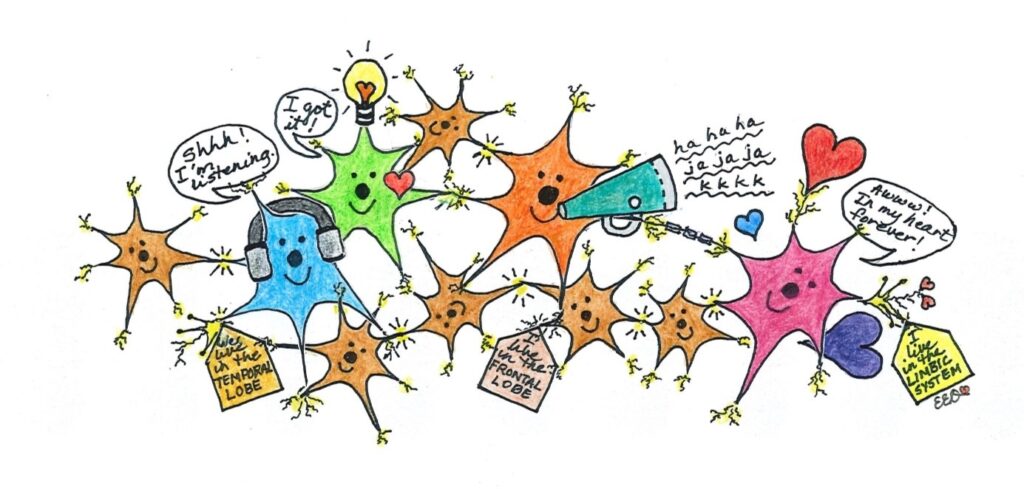
In Joyful Sound Sparks, the focus is on four special neurons that live in the brain.

When your child hears, says, and feels a sound — like “splash,” “achoo,” or “ha ha ha!” — this joyful brain team lights up and goes to work.

Together, they help turn everyday sounds into language, meaning, and memory — all through play!

Auditory processing

What it does:

The Listener Neuron picks up the sound your child hears and quickly sends it to the brain’s auditory center.
It helps recognize what the sound is — a laugh, a sneeze, a dog bark — and tells the brain,

📣 “Hey! We’ve heard this before!”

Where: Temporal lobe (auditory cortex)
Why it matters: This is the first step in making sense of language

Understanding language

What it does:

The Meaning Maker Neuron helps your child understand what the sound means.
When your child hears “moo,” this neuron helps them think: That’s a cow!

📣 “I know what that means!” 

Where: Temporal lobe (Wernicke’s area)

Why it matters: Understanding turns sound into meaningful language — not just noise!

Talking, sounding out words, and making silly voices

What it does:

The Speaker Neuron helps your child say the sound out loud!
It tells the mouth and tongue how to move — and makes “achoo!” or “moo!” or “woof!” come to life.

📣 “Let’s try saying that sound!”

Where: Frontal lobe (Broca’s area)
Why it matters: Speaking strengthens memory and makes language active and fun.

Emotional connection + memory

What it does:

The Feeler Neuron connects the sound to emotion and memory — making it meaningful.
It helps your child feel joy when laughing, comfort from a “purr,” or surprise at a “pop!”

📣 “That sound makes me feel something!”

Where: Limbic system (amygdala + hippocampus)
Why it matters: Emotion helps language stick in the brain — especially through joy.

✨ What Happens When They Work Together?

When all four neurons join forces during playful sound experiences:

🎧 Your child hears the sound
🧠 Then understands or recognizes it
🗣️ Then says or acts it out
💖 Then feels something and remembers it

That’s when a joyful language spark is born —
and strong, lasting brain connections begin to grow!

🎉 Kid-Friendly Version:

Meet the Sound Neurons!

  • Blue hears the sound.
  • Green understands what it means.
  • Orange says the sound.
  • Pink feels the sound.       

💥 Together, they make your brain light up with joy!

Because when your child hears it, understands it, says it, and feels it — language doesn’t just stick… it sparks!

BRAIN-FRIENDLY LANGUAGE LEARNING THAT REALLY WORKS

A gentle guide for parents raising bilingual children

As parents, we often wonder: “Am I doing this right?”
Especially when it comes to language learning — something so big, so meaningful, and so personal.

The truth is, you don’t need to be perfect. You just need to understand how your child’s brain learns best.

The latest neuroscience tells us this: learning doesn’t happen through pressure or perfection — it happens through repetition, play, emotion, curiosity, and real connection.

Here are four simple, science-backed strategies that work for all kinds of learners — even if your child has a unique style or personality. These tools are flexible, joyful, and easy to weave into daily life.

Review information over time, not all at once.
This helps the brain hold on to what it’s learning.

Try this:
If your child is learning colors in Spanish (rojo, azul, verde)…

  • Day 1: Introduce the words while coloring.
  • Day 2: Play a quick “find the color” game.
  • Day 4: Use them during snack time.
  • Day 7: Ask casually on a walk: “¿Dónde está el verde?”
  • Day 10: (creative review with another activity)
  • (Optional) Days 14, 21, 30 (creative review with other activities)

The brain remembers best when it’s reminded just before forgetting.

Instead of showing the answer — ask them to remember it.
This strengthens the brain’s memory pathways.

Try this:
Show a picture of a cat and ask, “Do you remember how to say this in Spanish?”
If they struggle, it’s okay — that mental effort helps memory stick.

It’s not about getting it right. It’s about making the brain reach for the word.

Pair words with visuals, movement, or sounds.
The brain loves learning through more than one channel at once.

Try this:
When teaching “bird,” show a picture, say the word, and flap your arms like wings.
Draw it, sing it, act it out — let your child see it, hear it, and feel it.

Words + images + motion = magic for memory.

Mix different topics and activities instead of repeating the same one.
This helps the brain learn to adapt and make connections.

Try this:
Instead of 10 flashcards in a row, try:

  • A quick vocabulary game
  • Then a song
  • Then a drawing
  • Then review a word from yesterday

Mixing it up makes learning feel fresh and engaging — and keeps the brain alert!

Final Thought

You don’t need a perfect system. You just need simple, joyful strategies that work with your child’s brain — not against it.

When learning feels light, playful, and meaningful… it sticks.
And that’s what Joyful Bilingual Beginnings is all about.

Warmly,
Elisabeth 💛

SPACED REPETITION PLAN FOR PARENTS

Gentle, brain-friendly review steps for ages 3–11

Why it works

The brain remembers best when it’s reminded just before it forgets.
By spacing out reviews, you help move new words into long-term memory — naturally and joyfully.

Suggested Review Timeline

Day

Day 1

Activity example

Introduce new words through play, song, or art

Goal

First joyful exposure

Day 2

Ask about 1–2 words in a fun moment (e.g., “What color is this?”)

Reinforce with low-pressure recall

Day 4

Use a movement or drawing game with the words

Strengthen memory through multisensory play

Day 7

Review in a new setting (walk, mealtime, nature)

Add variety and real-life use

Day 10

Hide-and-seek word hunt, storytelling, or silly quiz

Make it memorable through surprise and fun

Days 14, 21, 30

(Optional)

Return to the words with creative review

Build long-term retention

Tips for Success

• Switch up the type of activity — kids love novelty!
• Don’t worry if they forget — it’s part of the process.
• Keep it light, warm, and fun — pressure blocks learning.
• Let them co-create games and activities — ownership boosts joy.

Final thought

Spaced repetition isn’t about drilling — it’s about weaving language into your everyday moments with love, laughter, and just the right amount of repetition.

NEURODIVERSE CHILDREN AND BILINGUALISM:
THE BEAUTIFUL TRUTH

Are you wondering if your neurodiverse child can become bilingual? Here's the wonderful truth:

Every child is born ready to connect — and languages can be a powerful, joyful part of that connection. Whether learning comes quickly or unfolds slowly, the capacity for language lives inside every child. With time, nurturing, and trust, amazing things can happen.

Language is a bridge — and every child can cross it.

No Limits, Just Possibilities


Recent research confirms what many parents and educators have witnessed firsthand: neurodiverse children are fully capable of becoming bilingual.


Differences in how they learn, communicate, and process information do not prevent them from developing skills in more than one language. In fact, multilingual exposure can be a strength, offering additional pathways for growth, connection, and self-expression.

Language development in neurodiverse children may follow unique patterns, but bilingualism itself does not create delays or confusion. Instead, it provides rich, meaningful experiences that nurture both cognitive and social development.


Despite lingering myths, research increasingly shows that neurodiverse children benefit from bilingualism just as neurotypical children do. Encouraging multiple languages celebrates each child’s unique ways of learning and communicating, while also fostering resilience, empathy, and global awareness.


Families and educators are encouraged to create supportive, joyful environments where children can explore and use different languages naturally and confidently.


Every word, every language, every child — beautifully unique.

The Benefits of Bilingualism for Neurodiverse Children


Enhanced Nonverbal and Flexible Communication
Learning more than one language often strengthens nonverbal communication skills, such as the use of gestures and facial expressions. It also encourages greater flexibility in understanding and expressing ideas across different contexts.


Improved Cognitive Flexibility and Adaptability
Bilingualism supports the brain’s ability to switch between tasks, ideas, and ways of thinking. For neurodiverse children, this flexibility can enhance learning strategies, problem-solving, and adaptive functioning in everyday life.


Stronger Emotional, Family, and Cultural Bonds
Maintaining and nurturing multiple languages helps neurodiverse children stay connected to their families’ cultural heritage. Speaking a home language deepens family ties, supports emotional well-being, and helps children feel a stronger sense of identity and belonging.


Bilingualism belongs to everyone.

Language learning is not a race. It is a path to connection, identity, and belonging — one that is open to every child, in their own time and in their own way.

A Personal Reflection: Trust the Natural Gift


In my own family, I have witnessed the beauty of this truth.
One of my sons, who is wonderfully neurodiverse, took longer to learn a second language than his older brothers. But that’s because he wasn’t immersed in the second language from birth. He was exposed to it once in a while, but not enough for natural acquisition. It wasn’t until he was nine years old, when we moved to the U.S., that he truly began learning it.


Despite the fact that his brothers learned almost instantly — becoming fluent and speaking without an accent — his journey looked different.
It’s true that learning at that age takes a bit longer, but he also needed even more time and extra support at school. Even now, 25 years later, while he understands, speaks, reads, and writes fluently, he still makes grammatical mistakes and often struggles with pronunciation — but he expresses himself confidently and feels no shame about making mistakes.


But the story doesn’t end there.

Six years ago, when we moved to Norway, he began learning his third language: Norwegian. It took him two and a half years of full-time Norwegian courses, with special support, compared to the one year typically given to others.
Today, he is trilingual.


The key lesson is clear:
• 🌱 He could learn.
• 🌱 He did learn.
• 🌱 He simply needed time, nurturing, and trust in the process.


When we understand that the human brain is designed to learn languages — especially with patience, love, and the right support — we can relax. We can trust. We can let go of fear.


Every child’s language journey is different. And every journey is beautiful. Language learning is not about reaching perfection — it is about growth, connection, and honoring each child’s unique way of being in the world.


Some flowers take longer to open — but their fragrance lasts forever.

🖐️ HIGH FIVES AND HAPPY BRAINS

Celebrating connection, emotion, and brain-friendly rituals.

A Simple Gesture That Sparks Joy, Connection, and Learning


What if one of the most powerful tools for your child’s learning didn’t come from a textbook or a classroom?


What if it came from the palm of your hand?


The high five—a simple, joyful gesture that carries a world of meaning!

Being Seen, Heard, and Celebrated… Kudos!


To an adult, it might seem small. But to a child, a high five can be a mini-celebration of their whole self.


It’s a way to say:
• I see you. 👀
• I hear you. 👂
• I celebrate you. 🎉


It’s not about perfection or performance.
It’s about presence.


That simple smack of connection tells a child:
“You matter. What you just did matters. And I’m here with you.”

Why the High Five Matters


A high five is:

  • A rhythm of joy
  • A spark of safety
  • A mirror of belonging
  • A playful anchor in the brain

It brings together touch, movement, sound, and emotion—a powerful combo for young brains and bodies.

What Happens in the Brain


When you give a high five:

  • Oxytocin rises (the connection hormone)
  • Dopamine gets a boost (the reward signal)
  • The nervous system feels safe
  • Memory gets a sensory marker

This opens the door to more learning. More joy. More trust.

Why It Helps Language Stick


Language isn’t just about words. It’s about meaning, rhythm, emotion.


A high five becomes a ritual of recognition that says:
“You tried. You spoke. You played. That’s worth celebrating.”


In those joyful moments, the brain remembers.
Not just the word, but the feeling that came with it.

Make High Fives Part of Your Language Rituals


You can use a high five:

  • After a new word or phrase
  • At the end of your daily language moment
  • After calming down together
  • As a playful “I see you” in your routine

Try pairing it with affirming phrases:

  • “You did it!”
  • “That was brave!”
  • “You’re learning and growing!”
  • “I love speaking with you!”

These aren’t just words. They become identity-shaping echoes.

For You, Too


Parents—you deserve high fives too.
You are showing up. Creating rituals. Planting seeds.

So here’s one for you, right now:
🖐️ You’re doing something beautiful.
Something that sticks.
Something your child will carry forever.

Tiny rituals, mighty brains.

😂 WHY LAUGHTER IS A SUPERPOWER IN LANGUAGE LEARNING

How giggles, goofiness, and joy build confidence, connection, and brain-friendly language skills.

Why Joy, Play, and Being a Bit Silly Help Words Stick


If there’s one thing language learning needs more of—it’s laughter.


Not just because it feels good (though it really does), but because it actually helps the brain learn better, faster, and with deeper joy.

Learning Doesn’t Have to Be So Serious


So many of us grew up thinking that learning a language was about getting it right.
Perfect grammar. No mistakes. Saying it properly or not saying it at all.


But here’s the truth:
Language isn’t born from perfection. It’s born from connection.


And one of the fastest ways to connect is to laugh.

What Laughter Does in the Brain


Laughter reduces stress hormones like cortisol.
It boosts feel-good chemicals like dopamine and endorphins.
And it helps us feel safe—physically and emotionally.


When we laugh:

  • The brain relaxes
  • Our memory opens up
  • We feel less self-conscious
  • We remember better

That’s why silly songs, funny faces, and laughing at language bloopers aren’t just fun…
They’re brain-friendly learning tools.

Laughter Teaches Children (and Adults!) to Let Go


Children aren’t afraid to be silly.
They play with words. They make up songs. They giggle when they get something “wrong.”


That’s not failure. That’s freedom.


As adults, we often hold back:

  • Afraid of sounding silly
  • Embarrassed to mispronounce something
  • Nervous to be seen trying

But the moment we give ourselves permission to be playful— to act something out, make a funny gesture, or laugh at a mistake— something amazing happens:


The pressure lifts. The learning begins.

What If You Taught Your Child That Laughter is Part of Learning?


Imagine if your child learned from the start that making a mistake in another language can be funny, not shameful.
That being silly is part of being brave.
That giggling, guessing, and even “nonsense words” can lead to real communication.


That’s the kind of learning that sticks.
That’s what turns bilingualism from a task… into a treasure.

Try This

  • Make up silly songs with the new words you learn
  • Speak in “silly voices” together
  • Use dramatic gestures and over-the-top faces when you don’t know the word
  • Laugh when you mess up—then try again
  • Tell your child, “Oops! That came out funny! Let’s try it again together!”

You’re not just building vocabulary.
You’re building joy. Confidence. Connection.

No One Speaks Perfectly—Not Even in Their First Language


Here’s something most people forget:
No one speaks their own language perfectly.
Not me. Not you. Not anyone.

We pause. We forget words. We say “um” and “uh” and make weird grammar choices.
We use slang, make up words, interrupt ourselves.
And guess what? It’s all part of the magic of real communication.


So why do we expect ourselves—or our children—to be flawless in a second language?


Let’s release that pressure.

The Joy of Language Mixing


If you’re raising a bilingual or multilingual child, you’ve probably heard it already:
Two languages, joyfully tangled into one sentence.
English + Spanish. German + French. A little of this, a little of that.


And sometimes… it’s hilarious.


“Mama, can I have another panquecito?”
“Look! It’s mein haus!


These “mistakes” aren’t mistakes. They’re creativity in action.
They’re the brain exploring, connecting, bridging.


So when your child mixes languages, or when you do, smile. Laugh. Play with it.


Because that’s not confusion. That’s growth.

Let Learning Be A Little Wild, A Lot Real, and Full of Joy


Laughter. Mistakes. Language mixing. Acting things out with dramatic flair.


That’s not just okay—it’s beautiful!


Because learning a language isn’t about perfection.
It’s about connection. Expression. Joy.


Let that be your compass.

Having fun and acting silly are superpowers in language learning. So… laugh loud, learn deeply, and love the journey.

UNDERSTANDING THE BRAIN

💖 FOR PARENTS:
WHY UNDERSTANDING THE BRAIN CHANGES EVERYTHING IN LANGUAGE LEARNING

Because what’s happening inside your child’s brain matters just as much as the words they’re learning.

When it comes to language learning in early childhood, what you do is very important—but how your child feels when they’re learning is everything.


From birth to around age 7, your child’s brain is in its most absorbent state.
It’s wired to learn implicitly—not through memorizing, but by experiencing.
Think of their brain like a sponge, soaking up the sounds, feelings, and rhythms of language without even trying.


By age 3, a child’s brain is already 80% developed—and by age 5, up to 90%.
But here’s the key: the part of the brain that helps with logic, planning, and problem-solving—the prefrontal cortex—is still just beginning to grow.


So when a child is stressed, overwhelmed, or upset, their brain doesn’t yet have the built-in tools to self-regulate the way adults do.


Instead, the brain shifts into survival mode: fight, flight, or freeze.
The “feeling brain” (limbic system) takes over, and the “thinking brain” (prefrontal cortex) goes offline—or, as with small children, hasn’t fully come online yet.


And in that state, language can’t stick.


This is why emotional safety is the foundation of lifelong language learning.


Understanding this gives you a powerful new way to support your child:

  • You don’t have to pressure or drill them.
  • You can use moments of joy, music, drawing, movement, and connection.
  • You become the loving guide who creates the right conditions for bilingualism to bloom.


This is the heart of your role—not as a perfect teacher, but as a calm, connected presence.
One who understands that language flows best when love, play, and science come together.


Because the brain learns best in love, not fear.

You’re not just teaching language—you’re shaping a lifelong relationship with learning.

🧸 FOR CHILDREN:
WHEN YOUR BRAIN LIGHTS UP - A STORY FOR EXPLORERS
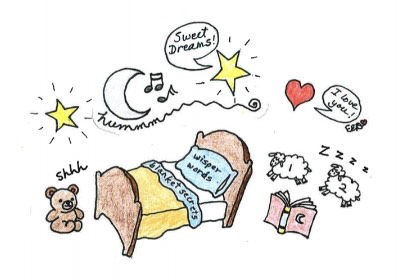
A joyful story to read aloud about feelings, calming down, and how your brain gets ready to learn new words.

Once upon a time, inside your head, there lived a tiny team of helpers.
They were called Brainy, Hearty, and Gutsy—and they loved learning new words!

  • Brainy helped you think.
  • Hearty helped you feel.
  • Gutsy helped you move and notice things.

They all lived in different parts of your brain:
Brainy lived up front in the thinking part,
Hearty in the middle where your feelings grow,
and Gutsy deep down where your instincts thrive.


They worked together like best friends in a big, busy brain house.
When you felt calm, safe, and curious, the lights in your brain house glowed bright.
That’s when you learned best—like a sponge soaking up new words!


But sometimes, when something felt scary or too big…

Hearty would press the red “Uh-oh!” button.


BOOP! The lights in the brain house would flicker.
Brainy would stop thinking.
Gutsy would get wiggly and jumpy.
You might feel like running, hiding, or crying.


That’s called a “flip-out.”
It’s not bad. It just means your brain is trying to protect you.


But here’s the magical part:
You can turn the lights back on!


All you need is your calm-down spell. You can:

  • Take a deep breath – like smelling a flower – and blow it out like a candle 🕯️
  • Sing or hum a song with someone you love 🎵
  • Hug your teddy or draw a picture 🖍️
  • Wiggle your body and shake out the “uh-ohs” 🕺


When you do that, the lights come back on!
Brainy wakes up.
Hearty smiles.
And Gutsy feels safe again.


Now your sponge brain is ready to soak up words—like magic!
And you? You’re a language explorer, ready for your next adventure.


THE END


Because the brain remembers what brings you joy.

💤 THE SLEEPY BRAIN LEARNS TOO

Why Bilingual Bedtime Moments Make Language Stick

Language that lingers, long after “Goodnight.”

What if your child’s brain was still learning long after you turned out the light?


It is.


Neuroscience tells us that the moments just before sleep — and even some stages during sleep — are incredibly powerful for memory, emotion, and learning.


This means the bedtime stories, lullabies, whispered words, and loving rituals you share aren’t just comforting.
They’re neurobiological gold.

What Happens in the Brain at Bedtime?

As your child begins to fall asleep, their brain shifts into more relaxed states:

  • Alpha waves (calm, focused)
  • Theta waves (dreamy, imaginative)
  • Then into delta (deep, restorative sleep)

During alpha and theta, the brain becomes highly receptive to sound, rhythm, and emotional cues — especially in the presence of safety and love.

This is where language learning thrives.

Words and songs repeated at this time are more likely to:

  • Be stored in long-term memory
  • Be associated with positive emotions
  • Activate implicit learning — the kind that happens without conscious effort

The Magic of Implicit Learning

Implicit learning is how we learn our first language — not through flashcards, but through experience, repetition, and emotional context.

At night, the brain’s conscious filter relaxes. This means:

  • Your child may absorb language passively
  • Their emotional memory links bilingual words with feelings of safety and love
  • Even non-native exposure (like a parent singing in their second language) becomes powerful

And yes — even playing gentle bilingual audio while your child sleeps can subtly reinforce language patterns.

What This Means for You

You don’t need a curriculum.
You don’t need a perfect accent.
You just need a moment — at the end of the day — to offer language wrapped in calm, love, and rhythm.

So when you:

  • Whisper a word in both languages
  • Sing a lullaby you remember from your childhood
  • Share a bedtime ritual from your Joyful Treasures…

…you’re not just ending the day.

You’re building a bilingual brain — softly, slowly, beautifully.

Try This

Tonight, choose one soft phrase in both languages — like “You are safe” or “Good night, my love.”

Whisper it with your hand on your child’s heart.

Say it again tomorrow.

Watch what happens in their eyes, their breath, and maybe… in their dreams.

Because bilingual learning doesn’t begin with grammar.
It begins with love — right before the lights go out.


Because your child’s brain remembers the love you whisper.

WHAT THE SCIENCE REALLY SAYS ABOUT LEARNING STYLES

Neuroscientists generally do not support the theory of learning styles (like visual, auditory, or kinesthetic learners) because there’s no scientific evidence that teaching according to someone’s preferred learning style actually improves learning outcomes.

Why Learning Styles Don’t Actually Help Us Learn Better


You’ve probably heard people say things like, “I’m a visual learner,” or “I learn best by listening.” It feels right, doesn’t it? But here’s the thing: scientists have studied this a lot, and they’ve found something surprising…

Matching lessons to someone’s “learning style” doesn’t actually help them learn better.


When we learn something new, our brains don’t just use one pathway like vision or sound. Instead, we use a mix of senses, memory, language, and emotions—all working together like a team.


For example:

  • When we read something, we might hear it in our mind.
  • When we watch a video, we also think about the words and ideas.
  • When we do something with our hands, we’re also seeing, planning, and remembering.

So even if you prefer learning a certain way, it’s better to use different ways to learn — draw it, talk about it, move with it, test yourself, and teach it to someone else.

Why labels can be harmful


Saying “I’m not good at learning by listening” or “I can’t learn by reading” can stop us from trying — and we might miss out on better ways to learn.


Instead of learning styles, what really works is:

  • Spaced practice (reviewing over time)
  • Mixing it up (using different types of problems or materials)
  • Explaining things in your own words
  • Combining pictures + words

What this means for you


Don’t worry about fitting into one “style.” Instead, try learning in many ways. The more ways you connect with an idea, the stronger your brain builds it.

WHY CHILDREN MUST FIRST SPEAK BEFORE READING IN A SECOND LANGUAGE

  1. Oral language is the foundation for literacy. According to UNESCO and the World Bank, children must first develop spoken fluency in a language before they can develop reading and writing skills in that language. Otherwise, literacy instruction becomes abstract, confusing, and emotionally stressful.
  2. Home language (L1) literacy first = best outcomes. Countless studies in bilingual education show that when children become literate first in their native/home language, they are more likely to succeed in acquiring second-language literacy later (Cummins, 2001; Thomas & Collier, 1997).
  3. Forcing L2 literacy too soon creates academic and emotional trauma. Early L2 literacy instruction without comprehension leads to frustration, failure, and fear — exactly what you saw in your classroom. This has been documented in multilingual classrooms globally.
  4. Creative, multimodal learning (music, art, play) = best for early L2 exposure. What you were doing — combining music, play, art, movement, and role-play — is exactly what research in second-language acquisition and neurolinguistics recommends (Krashen, 1985; Pinker, 1994). But because it’s outside the rigid curriculum box, it’s too often misunderstood.


So, what does creative, multimodal learning do?

  • 🎶 Music lights up both hemispheres of the brain
  • 🎭 Role-play builds empathy, speech patterns, and fluency
  • 🎨 Art strengthens visual memory and personal connection to language
  • 🤸 Movement encodes vocabulary into muscle memory
  • 🧩 Play keeps the amygdala calm so the brain stays in learning mode


This is best practice. It’s scientifically sound, emotionally intelligent, and developmentally appropriate.

NOT TAUGHT, BUT CAUGHT: WHAT THE BRAIN TELLS US ABOUT LANGUAGE LEARNING

  • Stephen Krashen (1985) revolutionized language acquisition by showing that:

Language is acquired, not learned, through meaningful input — not drills or forced production.

  • Steven Pinker (1994) highlighted that language is a biological instinct — not something that should be taught like math.                                 
  • Modern brain science now confirms:

Multisensory, emotionally safe, and movement-based learning activates more of the brain, improves memory, and reduces stress. (Willis, 2010; Immordino-Yang, 2016).

🌙 THE SUBTLE MAGIC OF WHISPERING AT BEDTIME

Where soft sounds meet deep science — and your quietest words leave the loudest imprint.

🤫 Soft Whispering Feels Like a Hug


Whispered voices are a well-known ASMR trigger, or “Autonomous Sensory Meridian Response”—that gentle tingling and deep calm feeling many experience. Research shows soft whispers (and other low-volume, repetitive sounds) can lower heart rate, reduce stress, and signal emotional safety to the brain.

🧠 Whispering Starts Memory Forming


Even while we’re drifting to sleep, our brains remain active and sensitive. Studies show that quiet words softly played at bedtime or during early sleep can increase deep, restorative sleep and improve memory formation the next day .


How It Works:

  1. Whispered words calm the nervous system, making transition to sleep smoother (thanks to ASMR‑like effects)
  2. In deep (NREM) sleep, memory consolidation begins—soft cues can gently reinforce the day’s learning
  3. REM sleep continues emotional processing—whispered language at bedtime becomes part of how the brain weaves feelings and words into lasting memory

💡 Why This Matters in Your Bedtime Ritual

  • Whispering in two languages softly works with the brain’s natural lullaby-like receptivity.
  • It creates a feeling of closeness, calming both child and parent, strengthening emotional connection.
  • This calm, coupled with memory-friendly sleep waves, means your whispered words are more likely to be stored long-term.

Parent Tip


Tonight, try whispering one sweet word or phrase in each language—just once or twice—while cuddling. Let your child drift off wrapped in warmth, soft sounds, and your love.

💛 Final Thought


Whispering at bedtime has a kind of gentle magic—it helps calm the nervous system, deepen connection, and strengthen memory in subtle ways.


The brain might not remember every word…
but it will always remember how your whisper felt.